Want to be in the loop?
subscribe to
our notification
Business News
VITAS WANTS APPAREL SECTOR ZONING PLAN REVISED
According to the master zoning plan for textile and garment industry development until 2020 with a vision toward 2030, the sector would post export revenue of US$20 billion. However, the industry’s shipments amounted to US$27.5 billion last year and are expected to soar to US$31 billion this year.
The sector has attained annual export revenue growth of 15% in the 2010-2015 period.
Deputy Minister of Industry and Trade Ho Thi Kim Thoa was quoted by the Vietnam News Agency as saying that apparel importers are shifting orders to markets with abundant low-cost labor. Vietnam’s textile and garment sector is projected to grow strongly in the next decade owing to more bilateral and multilateral trade agreements the country has signed, especially the Trans-Pacific Partnership (TPP).
Therefore, it is necessary to adjust the master zoning plan for textile and garment industry development until 2020 with a vision toward 2030, Thoa said.
VITAS chairman Vu Duc Giang said there is a big gap between the master zoning plan and reality, so the association has called for the Government and relevant ministries and agencies to review and revise it.
Giang said the textile and garment industry is in a good position to grow stronger and that the Government needs to have a long-term strategy to develop the industry and enable it to bank on opportunities from the country’s deeper international integration.
Vitas proposed the ministries of industry-trade and planning-investment work out viable plans to develop central industrial parks (IPs) for textile and garment firms to better manage wastewater treatment and ensure sustainable growth for the industry.
The industry needs large-scale IPs for domestic and foreign-invested producers of fiber and cloth and dyeing enterprises.
Some such IPs have gone up in Hung Yen, Thai Binh, Nam Dinh, Dong Nai and Binh Duong provinces but they are smaller than required, such as Pho Noi B covering only 121.8 hectares in the northern province of Hung Yen and Nguyen Duc Canh having an area of 102 hectares in the northern province of Thai Binh.
Vitas requested the Government to consider establishing industrial parks measuring 500-1,000 hectares for textile and garment enterprises and providing loan interest support for enterprises to invest in integrated wastewater treatment facilities.
The association wanted improved waterway and road connectivity between large-scale IPs for apparel firms and ports and logistics centers to help enterprises in the sector lower costs.
Giang pointed out large-scale IPs, better traffic infrastructure, effective management of wastewater treatment and environmental issues, and stable policies for taxes, fees and wages, and streamlined customs procedures as important factors for sustainable development of the industry.
Than Duc Viet, deputy general director of Garment Corporation No. 10, said the Government should finance construction of textile and garment IPs and wastewater treatment facilities to help enterprises reduce costs as most of the firms in the industry are small and medium and have limited finances.
IPs with good wastewater treatment facilities will help attract fiber, textile and dyeing firms, especially foreign-invested ones, producing more materials for the industry.
Source: The Saigon Times
Related News

INFRASTRUCTURE / CONSTRUCTION / LOGISTIC / PORT
VIỆT NAM-CAMBODIA TRADE GATHERS PACE TOWARDS $20 BILLION TARGET
Trade between Việt Nam and Cambodia continues to grow, remaining a bright spot and a key pillar of bilateral cooperation as the two countries aim to raise two-way trade to US$20 billion in the coming years. After setting a record of more than $11.3 billion last year, bilateral trade reached about $8.7 billion in the first eight months of this year, up 8.3 per cent year on year.
TECHNOLOGY
AI BEGINNING TO RESHAPE RECRUITMENT CRITERIA
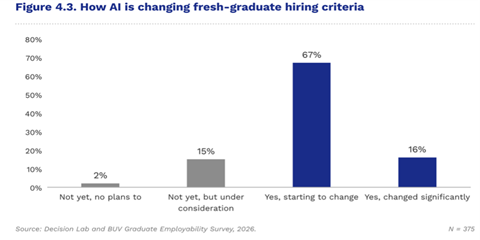
Digital literacy is the only capability area in which fresh graduates meet employers’ expectations, according to a new report. Yet, it is also the standard rising fastest, as businesses increasingly expect new hires to use AI effectively in the workplace. Some 83 per cent of employers say AI has changed, or is beginning to change, their hiring criteria, while 94 per cent report higher expectations for digital and AI capabilities than they had two to three years ago.

INFRASTRUCTURE / CONSTRUCTION / LOGISTIC / PORT
ĐÀ NẴNG GREEN-LIGHTS US$105 MILLION THAI DEVELOPMENT DEAL
The central city has approved an investment proposal by Thailand’s WHA Group to develop infrastructure for the 400ha WHA Đà Nẵng Industrial Park project on two communes of Thăng Bình and Đồng Dương, with an investment of more than VNĐ2.7 trillion (US$105 million). The city said it approved WHA Industrial Development International's status as an investor in the project, which is expected to take place between 2027 and 2034.

VIETNAM ECONOMY INVESTMENT
MOBILE PHONE EXPORTS RISE 20% TO $51.8 BILLION IN FIRST NINE MONTHS
Exports of mobile phones and components rose 20 per cent year-on-year to nearly US$51.8 billion in the first nine months of 2026, with China, the US and Republic of Korea accounting for more than half of the total. Shipments to the three markets reached a combined $26.18 billion, or 50.6 per cent of total exports of the product group during the period, according to data from the Vietnam Department of Customs under the Ministry of Finance.

VIETNAM ECONOMY INVESTMENT
FRUIT AND VEGETABLE EXPORTS POISED TO HIT $10 BILLION IN 2026
Fruit and vegetable exports are on track to reach nearly US$10 billion in 2026, after rising 19.9 per cent year on year to nearly US$7.4 billion in the first nine months, driven by strong seasonal demand and abundant tropical fruit supplies. The Ministry of Agriculture and Environment said the growth reflected stronger international demand for fresh produce and processed agricultural products.
GARMENT / TEXTILE
TEXTILE EXPORTS FACE DUAL CHALLENGES OF SUSTAINING ORDERS AND BOOSTING EFFICIENCY AMID GROWING COMPETITION
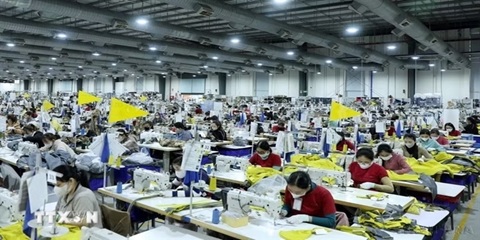
Data shows that the textile and garment sector maintained its growth momentum in the first nine months of this year. The industry's total export turnover reached an estimated US$35.721 billion in the first nine months of this year, up 3.3 per cent year-on-year. Despite posting encouraging export figures, Vietnamese textile and garment enterprises continue to navigate unpredictable market variables.
Events Sponsors






















